
How to Build an Effective Meeting Agenda (With Examples)
An effective meeting agenda is a promise about what will be decided, written down and sent early, not a list of nouns. Each item carries a topic, the kind of item it is, an owner, and the expected outcome, so everyone arrives knowing what they're being asked. Below you'll find the rules for building one, three copyable examples, and the mistakes that sink agendas in real meetings.
What a Good Agenda Changes About the Meeting
The stakes are easy to state: managers spend an average of 23 hours a week in meetings, nearly half of it judged unproductive, and about two-thirds of meetings get rated as a waste by the executives who sit in them. That's not a scheduling problem, it's a purpose problem, because a room without a stated goal drifts into talk nobody owns afterwards.
A sharp agenda works before anyone sits down, because people prepare differently when they know the ask. Give a topic five minutes and people hit the highlights, give it thirty and they arrive with facts already gathered. The time you assign shapes how people show up, which is why the agenda is the meeting.
Timeboxing is also one of the few meeting techniques that survives contact with research, because a hard limit forces the group to be honest about how much discussion an item deserves. Set the limit, and the room cuts the fluff to reach the part that matters. Deep-dive topics that would swallow the hour get caught and parked instead.
Building the Agenda, From Blank Page to Sent Invite

Start by naming the decision the meeting exists to make, because that sentence becomes the filter for every item on the list. Each entry then needs four things, per Microsoft's own guidance: the topic, whether the entry shares information, drives discussion or forces a decision, the person leading it, and the expected outcome. An item without an owner stalls, and an item without an outcome produces discussion instead of a result.
Assign each item a realistic duration with a couple of minutes of buffer, and protect a recap window of five to ten minutes at the end. The buffer keeps one heated debate from breaking the whole schedule, and the recap window is where you confirm decisions and owners before the room empties. People tolerate meetings that run short, and nobody forgives the ones that run long for no reason.
Then send it at least 24 hours ahead, so participants can read, prepare and bring what they're being asked for. An invite without an agenda spends its first ten minutes on context, which is the most expensive context delivery in any company. And add a parking lot to the template, so off-agenda topics get written down and handled later instead of eating the room's time.
Three Agenda Examples You Can Copy
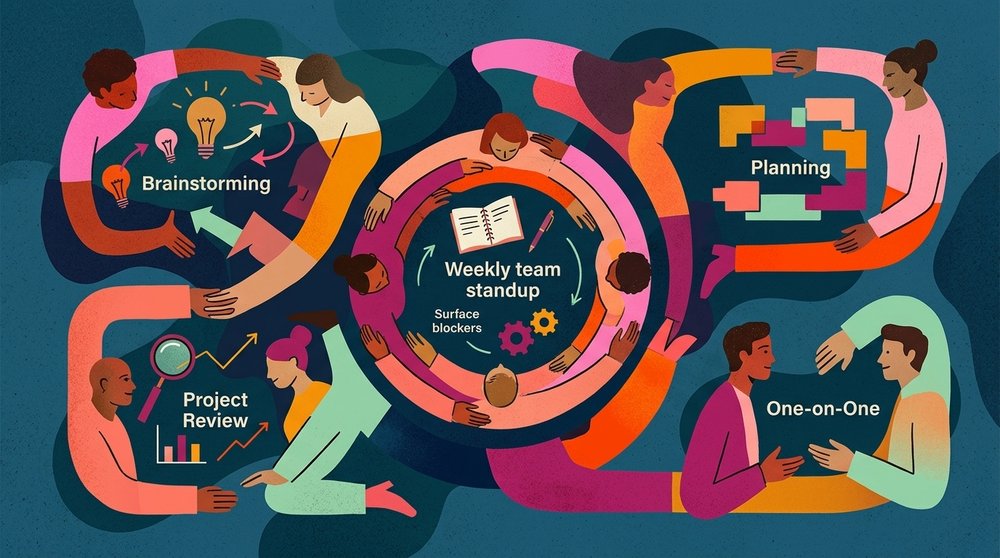
Standup, 15 minutes. Round-robin updates at 60 to 90 seconds each: what you finished yesterday, what you're doing today, what's blocked. Three minutes of blocker parking lot, where anything needing a real discussion gets an owner and moves offline. Done, with the whole team still in the 15 minutes.
One-on-one, 30 minutes. Ten minutes on the report's agenda first, because the person who's managed should set the topics rather than inherit yours. Fifteen minutes on the two items that matter this week, each with an expected outcome. Five minutes on growth and feedback, which is the first thing to get squeezed when time runs short and the first thing people quit a job over.
Project kickoff, 60 minutes. Twenty minutes of context, because nobody can make good decisions about work they don't understand. Twenty-five minutes on scope, risks and open questions, captured as a list with owners. Ten minutes to confirm owned next steps and the date of the first checkpoint. Five minutes of buffer, which kickoff meetings always spend.
These shapes work because every item has a type, an owner and a time, so the meeting can't drift without somebody noticing. Adjust the minutes to your team, but keep the four-part structure on every line.
The Mistakes That Sink Agendas
The first killer is the topic list with no outcomes: seven nouns and a verb, none of which tell anyone whether they're there to hear something or decide something. The fix is writing the type on every line. The second is no owners, which produces the same stall every time, because a topic everyone owns is a topic nobody drives.
Overcramming is third, and it fails quietly: every item runs over, the recap gets skipped, and people leave with different ideas of what was agreed. Set realistic durations, add buffer, and cut items rather than compressing them. A four-item agenda that finishes beats a nine-item agenda that gets abandoned at item five.
The last one is no parking lot, which hands the meeting to whoever thinks of a tangent first. Write the tangent down, name an owner, and move on. The person who raised it keeps their idea, the room keeps its purpose, and the tangent gets handled later by the two or three people it actually concerns.
Turning the Agenda Into Follow-Up
The recap window is where the agenda pays out, because it's where decisions get confirmed and owners get named while everyone still agrees. Spend it saying the decisions out loud, not summarizing vibes. Then turn that recap into minutes or action items while the details are fresh, and the meeting minutes with clear action items become the artifact that outlives the meeting. A meeting summary template keeps that step fast enough to actually happen.
Handle the parking lot the same day if you can, with only the people involved, because a parked item that nobody owns becomes a grievance by Friday. And if there's a disagreement later about what the room actually decided, a recording or transcript settles it, though it doesn't replace the recap itself. More meeting guidance lives on the site if you're rebuilding how your team runs these.
Frequently Asked Questions
What should an effective meeting agenda include?
Four things per item: the topic, whether it shares, discusses or decides, the owner who leads it, and the expected outcome. The meeting-level details go with them: time, attendees, and any pre-reading. If an item is missing its outcome, it isn't ready for the agenda.
How far in advance should I send a meeting agenda?
At least 24 hours, so people can prepare what you're actually asking them for. Bigger decisions deserve more lead time, because the quality of a discussion is set by how prepared the room is when it starts.
How long should a meeting agenda be?
Long enough to cover the items, short enough to finish. Assign a realistic duration per item, add buffer, and reserve the last five to ten minutes for the recap. If the list can't fit the slot, cut items rather than compressing them.
What is a parking lot in a meeting agenda?
It's a written holding area for off-agenda topics, each with an owner, so tangents don't take over the room. The items get handled after the meeting with only the people involved. It keeps good ideas from being lost and bad timing from costing the group its hour.
How do I keep a meeting on schedule?
Timebox every item, give each one an owner who's responsible for moving it along, and use the visible clock: announce when an item's time is up rather than letting it slide silently. The parking lot is the pressure valve that makes the limits hold, because people will accept a time limit when they know their topic isn't being lost.